David Butler · 15 September 2026
Factors Influencing Ranking Stability During Major Website Overhauls
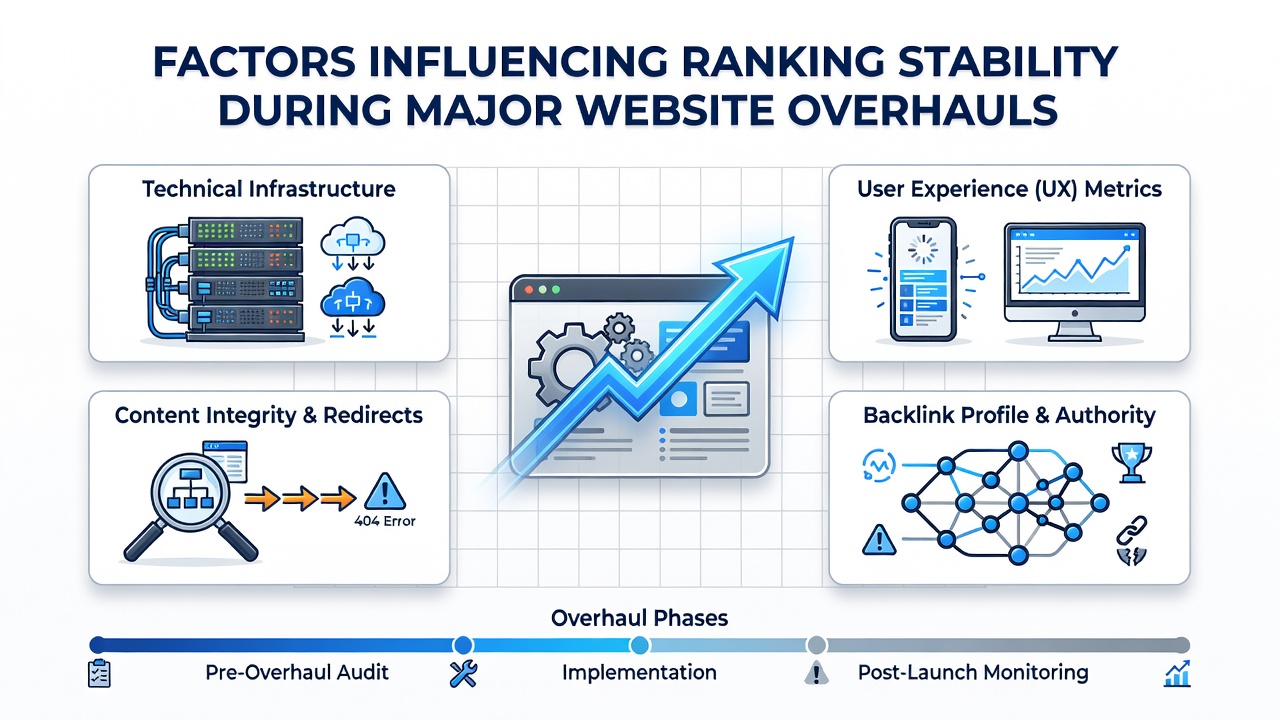
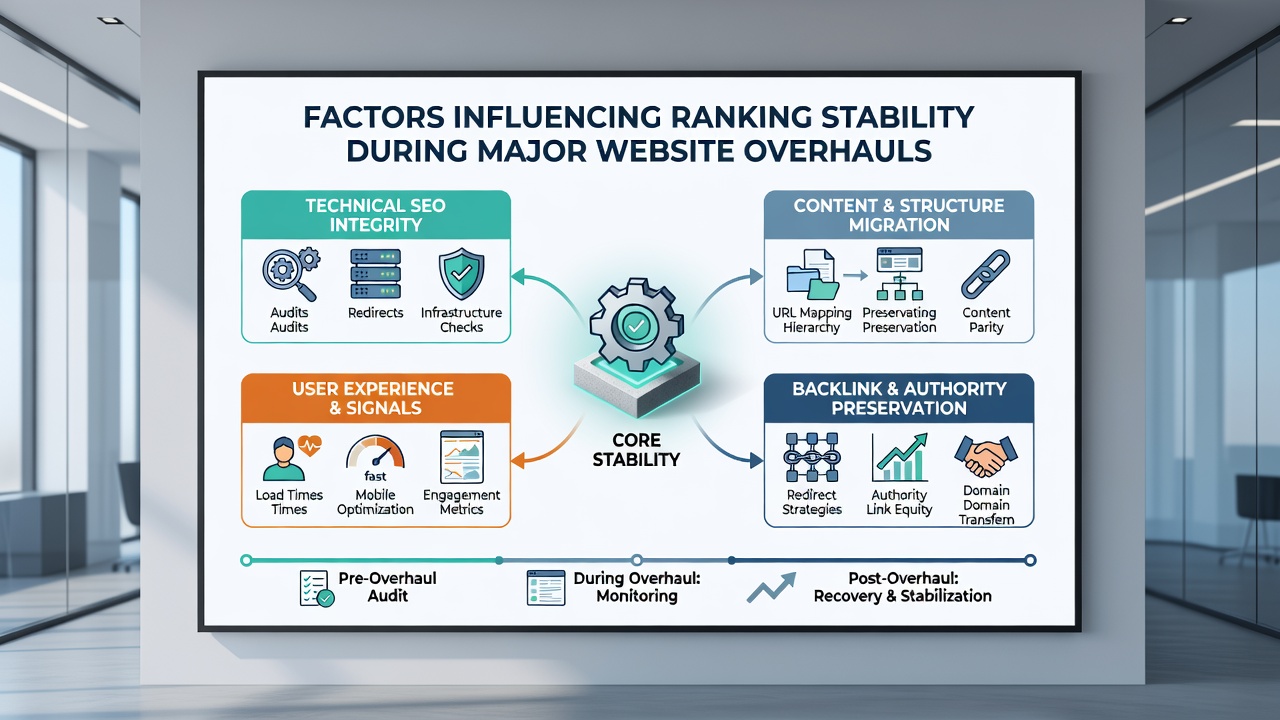
Major website overhauls bring together structural changes, content shifts, and technical updates that collectively shape how search engines evaluate and rank pages, while observers note that ranking stability often hinges on how well teams manage redirects, preserve signals, and maintain crawl efficiency throughout the process.
URL restructuring stands out as one primary element because search engines rely on consistent page identities to transfer authority, and when teams alter thousands of addresses simultaneously without precise mapping, rankings can shift as crawlers reprocess the new paths adn reassess relevance signals.
Redirect Strategies and Authority Transfer
Proper implementation of 301 redirects allows equity to flow from old addresses to their replacements, yet incomplete chains or temporary 302 codes disrupt that flow and force engines to treat pages as new entities, which delays recovery and introduces volatility that lasts weeks or months depending on crawl frequency.
Research from academic institutions shows that sites preserving exact keyword-rich anchor text in internal links during redesigns retain more stability, while those who overhaul navigation menus without updating these references experience drops because engines interpret weakened topical connections as reduced relevance.
Content Migration and Signal Preservation
Content volume and quality remain central during overhauls, since removing or consolidating pages alters the indexable footprint and can shrink the total signals engines use for ranking decisions, and data from industry reports indicates that keeping historical publication dates and author markup intact helps maintain temporal and expertise cues that support steady positions.
Metadata elements such as title tags and structured data require careful porting because abrupt changes to these on-page factors prompt engines to reevaluate intent and potentially reorder results, whereas gradual testing of variations on staging environments allows teams to measure impact before live deployment.
Crawl Budget and Indexing Dynamics
Crawl budget allocation becomes critical for large sites where thousands of new or redirected URLs compete for attention, and experts have observed that submitting updated XML sitemaps immediately after launch combined with robots.txt refinements helps engines prioritize important sections and reduces the time pages spend in limbo before reindexing.
Site speed and mobile responsiveness also factor in because overhauls frequently introduce new frameworks or scripts that increase load times, and performance metrics tracked by tools from organizations like the World Wide Web Consortium demonstrate that slower experiences correlate with ranking dips until optimizations restore previous benchmarks.
Backlink Profile and External Signals
External backlinks continue to influence outcomes even when the site itself changes, yet broken inbound links from referring domains create gaps that dilute authority flow, and analysts point out that proactive outreach to update those links before the overhaul minimizes the temporary loss of referral strength.
In September 2026, several enterprise platforms documented how monitoring third-party link changes during their migrations helped stabilize recovery timelines, since engines weigh fresh external signals alongside internal updates when recalculating rankings.
Monitoring and Iterative Adjustments
Continuous tracking through analytics platforms reveals early signs of instability, allowing teams to address issues such as duplicate content flags or canonical tag conflicts before they compound, while phased rollouts that launch core sections first give engines time to process changes incrementally rather than all at once.
Conclusion
Ranking stability during major website overhauls depends on coordinated management of redirects, content integrity, crawl efficiency, and external signals, and those who coordinate these elements methodically see shorter periods of fluctuation followed by restoration of previous positions.